Overview
Designing a platform for end-of-life dialogues within family members
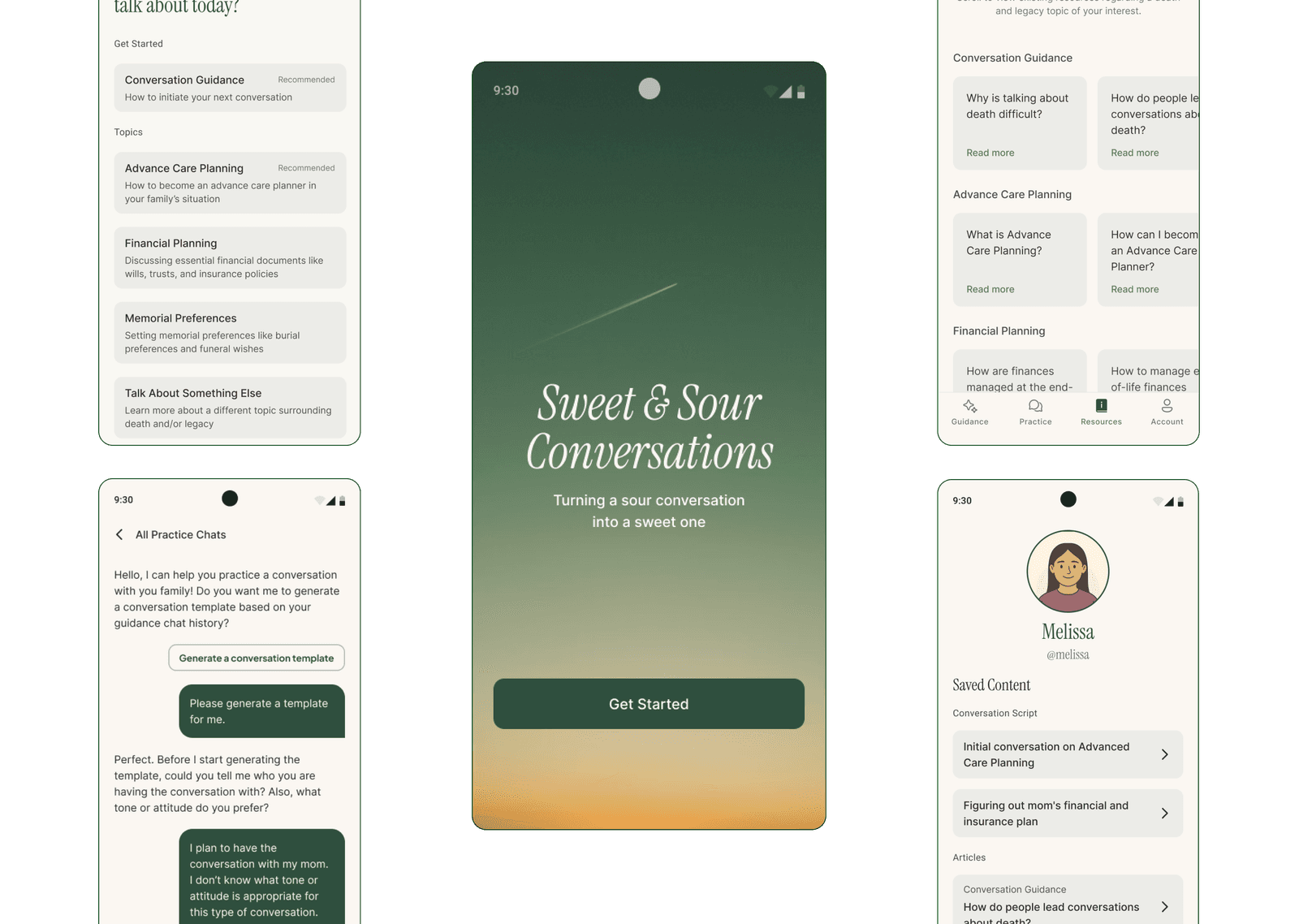
Aging and care planning are universal realities, but talking about them with our loved ones is incredibly uncomfortable. While most people agree these conversations are crucial, they constantly delay them because they do not know how to start without causing tension or sadness.
Solution
A virtual platform that provides users with personalized guidance and pre-conversation preparation for future conversations about death and legacy.
Our initial assumption
Families completely avoid end of life planning because it is too awkward
User Surveys
20 participants obtained through word of mouth and shared communities
User Interviews
5 participants across Zoom. Recruited through university channels
Secondary research
Collected through research papers on death and family dynamics
Usability Test & Critique
Many pivots after listening to feedback!
The reality check: 80% of families talk logistics, but crave depth
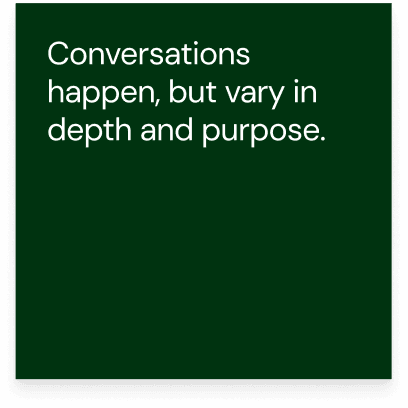
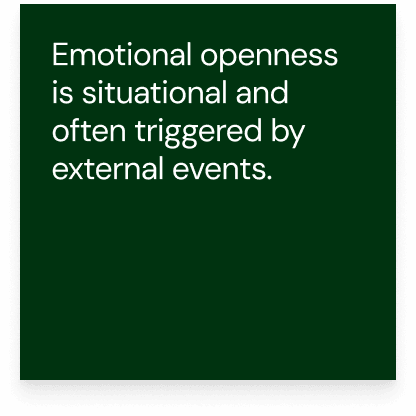
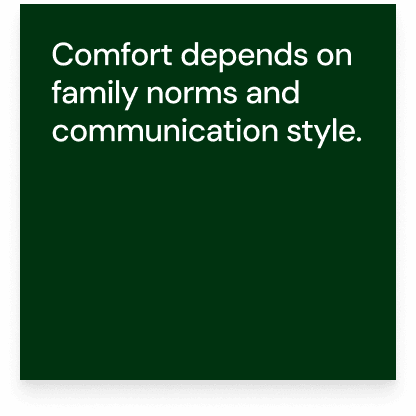
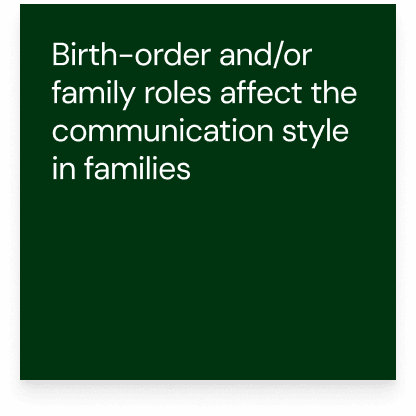
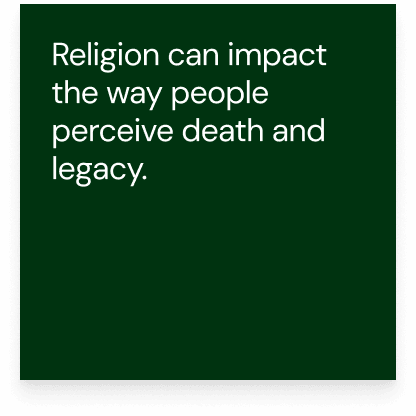
Four research methods revealed that family conversations about death tend to be practical rather than emotional, triggered by crises, and shaped by family norms, birth order, and religion.
Design
Thinking outside the box
When we first started coming up with ideas of solutions, we explored the concept of doing family activities (like games) to facilitate these conversations.
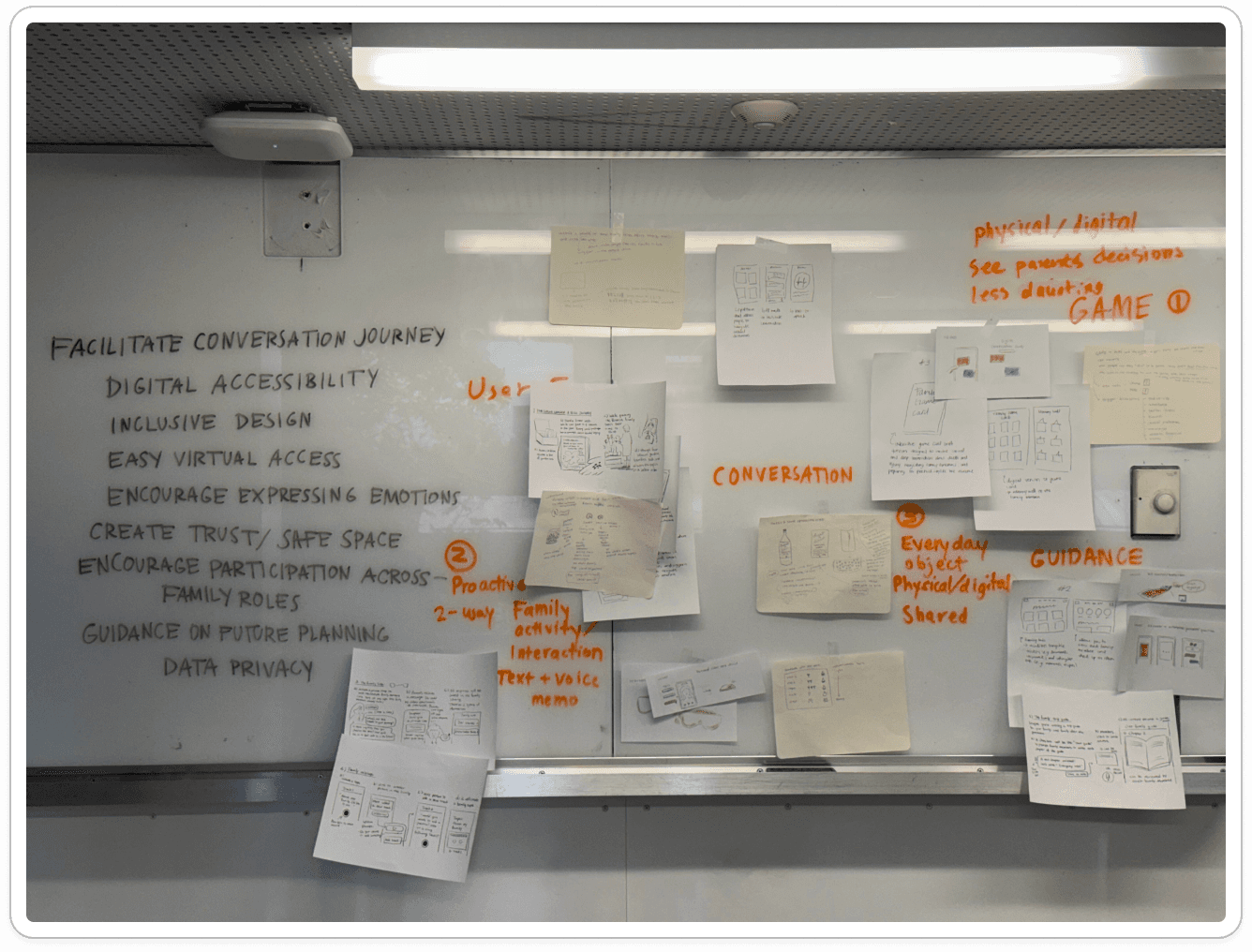
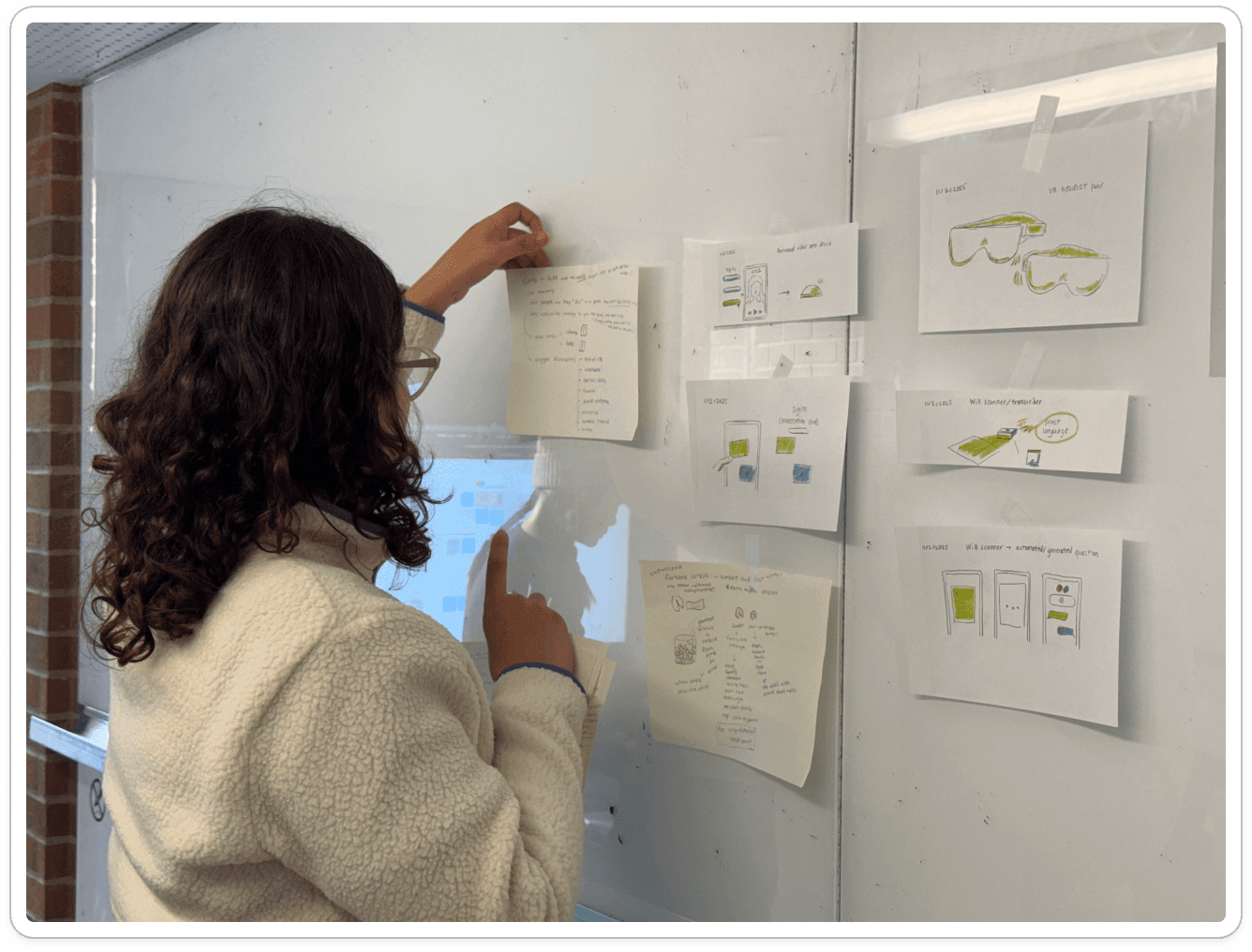
Attempting to turn "sour to sweet" through a gamified wine-brewing app
This concept encourages families who are living apart to participate in difficult conversations about death and legacy and provides an incentive through a physical customized wine/beverage.
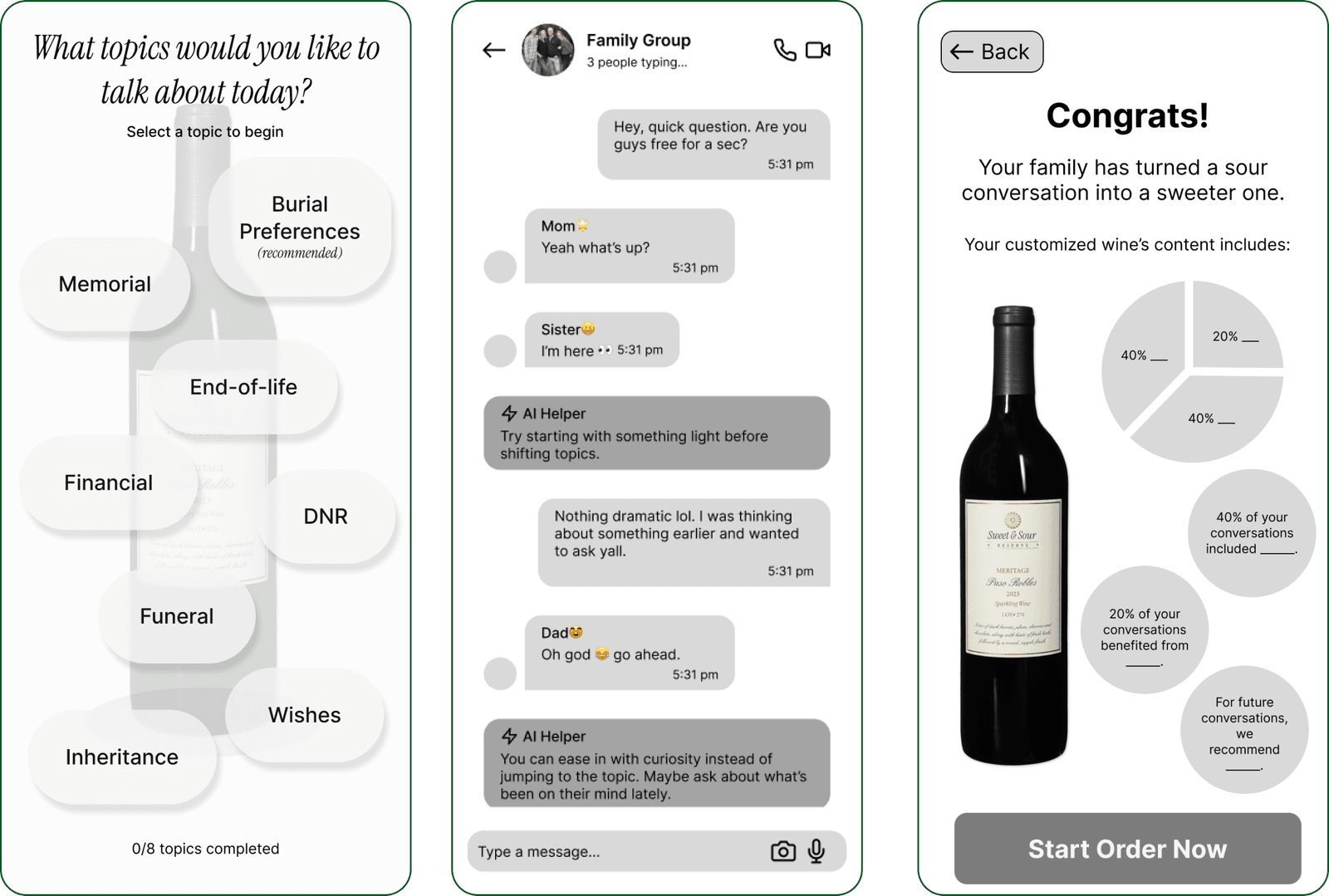
Pivot 1: Peer review reveals the wine metaphor is culturally exclusive
During design critiques, peer feedback highlighted a major flaw: wine brewing is not globally or culturally inclusive. For many families, alcohol carries religious, cultural, or personal taboos that would alienate the exact users we wanted to support. We realized the metaphor itself was creating a barrier.
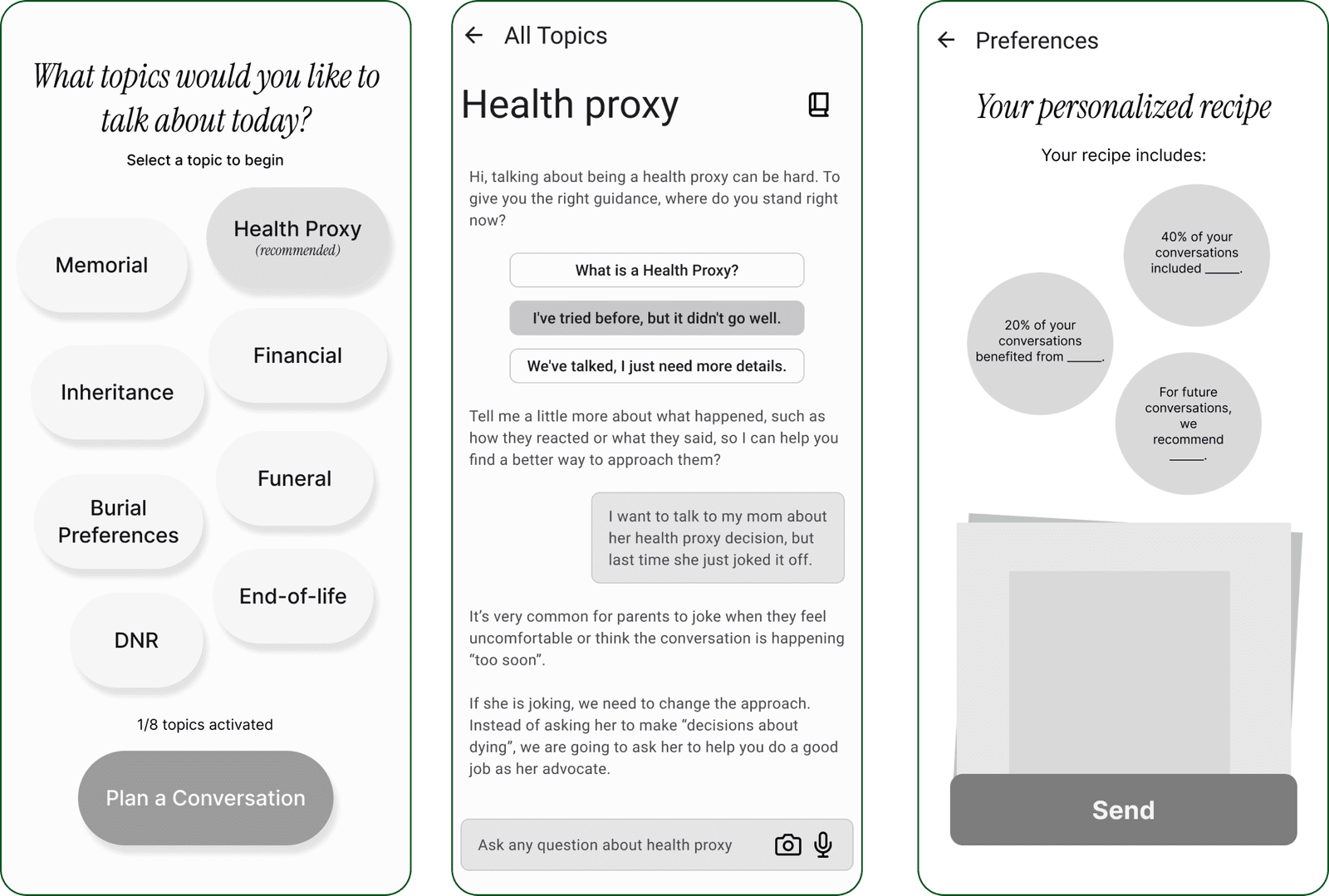
Pivot 2: Usability testing reveals users don't want a game at all
We took the recipe prototype into usability testing, and the feedback was a definitive wake-up call. The metaphor completely confused people. They did not want an intellectual detour or a playful game to talk about death.
"Is this a recipe about how to have the conversation, or is this a recipe about what to eat?"
—P3, rated the Plan a Conversation feature 5/5 difficulty
Reflection
If I did this project again, I would…
Get the AI principles down
I would dedicate more time to AI design principles to ensure the product followed best practices. With topics as sensitive as death, safety and privacy concerns surfaced across all testing methods. Our number one priority would be to address this to help with adoption.
Build a rapid prototype
We bounced around ideas for a prototype LM that could simulate a conversation, but due to time constraints we could not complete this. I believe building a functional conversational prototype earlier to test for edge cases would inform stronger design decisions.